
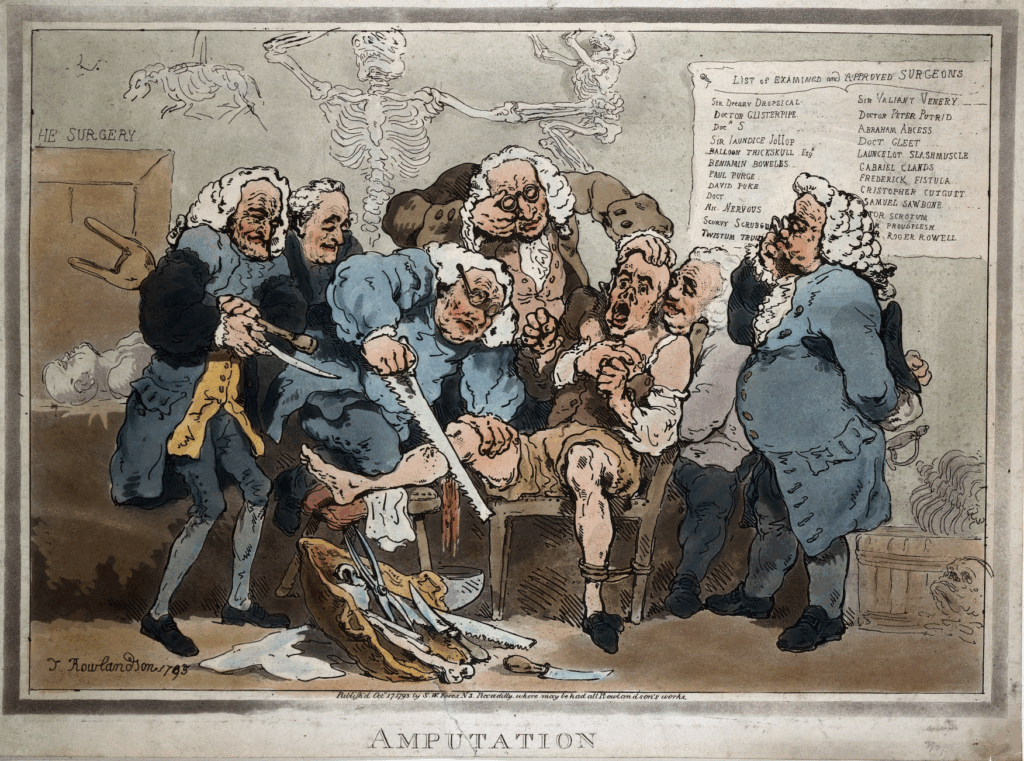
You may have heard a version of this old joke: A man is in a terrible accident and is rushed to the hospital. After hours of surgery, the doctor finds the man’s wife in the waiting room. “Good news,” the surgeon says. “We were able to save your husband’s legs.” “What a relief!” says the wife. The surgeon adds, “The bad news is that we couldn’t save the rest of him.”
It seems the NU administration is following that surgeon’s operating strategy. Faced with a relentless barrage of financial hits—many from the state government, others that were self-inflicted—the administration is opting to save anything but the vital organ.
At the UNL Faculty Senate meeting this week, Senate President John Shrader presented some numbers that cast this in stark relief. Since 2017, adjusting for inflation, this is how the system administration has allocated state funds to its campuses:
- The central administration itself: increase of 56%
- UNMC: increase of 28%
- UNO: decrease of 13%
- UNK: decrease of 13%
- Nebraska College of Technical Agriculture: decrease of 15%
- UNL: decrease of 24%
What exactly is the plan here? To have a state-of-the-art medical center in Omaha, a stable of well-nourished lawyers and bureaucrats in Varner Hall, some frugal secondary campuses in Omaha, Kearney, and Curtis, and a Lincoln “flagship” comprised of a flashy, upgraded sports stadium surrounded by tumbleweed and cobwebs?
Cuts to academic programming at any of NU’s campuses would be painful—they would destroy faculty livelihoods and deprive the communities served of opportunities to learn and grow. But academic program cuts to the flagship campus—the vital organ, the heart of the system—also affects the health of the entire system.
The proposed cuts at UNL are baffling. Some of my colleagues who understand educational administration and statistics—for example, the ones in Educational Administration and Statistics, both on the chopping block—have pointed out many gaps and errors in what scant data the administration has seen fit to share with its supposed partners in governance, the faculty. The absence of transparency, the artificially rushed process, and the faulty data and analyses slicked over with the label “metrics” have led faculty and students to speculate about what is behind this.
About a year or so ago, NU faculty heard that millions more dollars in systemwide budget cuts were coming. Some of us worried that UNL was heading into these cuts as the only one of the three general campuses that doesn’t have a faculty union to protect our vital functions of research and education. So here we are: the core campus, yet without a union to stand between us and the bone saw, the most vulnerable one. Perhaps the surgeon simply thinks it easiest to amputate the torso and save the legs.
