
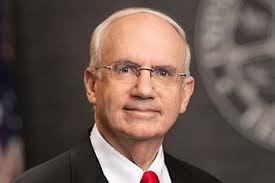
President Jeff Gold and Interim Chancellor Katherine Ankerson met with a group of about ten faculty on Thursday, March 19th for nearly two hours on Zoom. The goal of the meeting was to hear concerns about budget cuts, specifically from several faculty in departments slated for elimination. I am sharing some highlights from the conversation that might be valuable for our wider campus community, with minimal editorializing, and direct quotes noted as such.
To start, the meeting was scheduled for 30 minutes and it lasted nearly two hours. It was civil and ended with gratitude for the time spent and perspectives exchanged.
What faculty shared
-There is a real need for conversation about how UNL is supported at the system level
-Eliminating tenured faculty through such a problematic process – without true shared governance and flawed metrics – remains alarming and calls into question protections of tenure at UNL
-Revenue loss resulting from the cuts will swamp any savings by an order of magnitude
-Programs that were lost remain unique/non-duplicative and critical for workforce development of the state
-Programs that were lost were not underperforming but rather are nationally renowned
-A member of the APC expressed that the process was deeply flawed and rushed. Further, administrators should have recused themselves from voting, and alternatives to eliminating departments were not considered.
-Much was shared in nearly two hours, but one colleague summarized the sentiment: “It’s not really any surprise that faculty are unhappy, morale is low and people are scared. It’s not a good recipe for innovation or improvement, and faculty aren’t going to be willing to invest in an institution that is making it very clear that the institution’s not going to invest in faculty either.”
What we heard from Administration:
Administrators understand that morale is terrible on campus and trust has broken down.
President Gold and the administrators are aware that trust is a concern on campus (also on the call were Christ Kratochvil, Vice President for External Relations of the NU System, and David Jackson, Interim Executive Vice President and Provost). Several faculty in attendance shared how terrible morale is. We heard several times that the administrators hear us and are aware of the pain, but also aware it did not happen overnight and will take time to repair.
The budget outlook for the future will require more cuts but 0% raises are unsustainable.
President Gold told us, verbatim: This is probably not the last time we’re going to have to address budget gaps.” President Gold knows that they can’t give 0% raises again and noted “I am very well aware of the consequences last year of a zero across-the-board merit raise package. And I’m also well aware that it would be impossible to do that again. So you’re hearing that from me loud and clear, even if that means another set of budgetary reductions.” Additionally, President Gold noted that they try hard to advocate for funding with the legislature,“but the state of Nebraska has systematically and repetitively underfunded higher education and underfunded the University of Nebraska”.
The budget cuts unfolded in a way that was imperfect but followed a process.
When asked about how the budget cuts transpired last fall, we were told that Chancellor Ankerson reviewed the process after the January 15th listening session. This included listening to the APC hearings, visiting with EVC Mark Button, and reviewing the information. She believes that the process and metrics were vetted. Chancellor Ankerson did not directly answer if she had watched the Statistics Department’s recorded seminar regarding problems with the metrics. When asked again directly if she believed the process followed was fair, unflawed, and in-line with bylaws, she made the following remarks:
“In my review of the materials, and the processes they followed, in my view, they followed the letters of the processes that were laid out in the APC process”…
“Do I think it was unflawed? I don’t think any process is perfect.”
“Do we have work to do? Yes, I believe we have a lot of work to do in a lot of ways we’re trying to address the communications portion”…
“The overwhelming majority of decision making is campus-based decision making.”
When it was noted that there is confusion amongst UNL faculty and staff about who makes decisions, President Gold insisted, repeatedly, that he does not make decisions for our campus, and that “the overwhelming majority of decision making is campus based decision making.” He reiterated that he trusts campus leaders to make decisions. However several people underscored the sentiment that decisions are being made above the campus level, including a specific mention from EVC Button of the vertical cuts being called for from the Board of Regents (see the Faculty Senate Exec committee meeting notes from September 16, 2025, as one example, although there were many more claims made last year, including from Rodney Bennett, regarding the directive for departmental eliminations coming from above UNL).
We should continue to demand transparency and accountability.
It’s up to all of us to find ways in our spheres and processes to hold administrators accountable for shared governance and transparency, per this direct quote from the meeting from President Gold:
“I’m a strong believer in the value of shared governance. Obviously, we need to do a better job. I’m more than willing to continue to engage with you folks and others if, if that’s what you’re asking me in these processes. I’m more than willing to be totally transparent in communications and videos and written information, et cetera, about decision making that occurs at the system level.”
Takeaways
President Gold believes that more cuts are coming and 0% pay increases are not feasible“even if that means another set of budgetary reductions”. There are thousands of line items in a University budget; it is disingenuous to suggest that our only choice is between basic workplace pay increases and more friends and colleagues losing their jobs. University budgets are full of priorities, values and choices. Why not release the whole budget and let faculty help make decisions about trimming items that have less impact on our overall mission?
The need for solidarity remains clear to me on many fronts, including focusing on underfunding from the state and holding administrators accountable for transparency and shared decision-making regarding budget decisions. It is our goal as the AAUP advocacy chapter to continue doing so. We hope you will follow and join in opportunities to advocate for more transparency and accountability, in overall support of our valued public institution.
